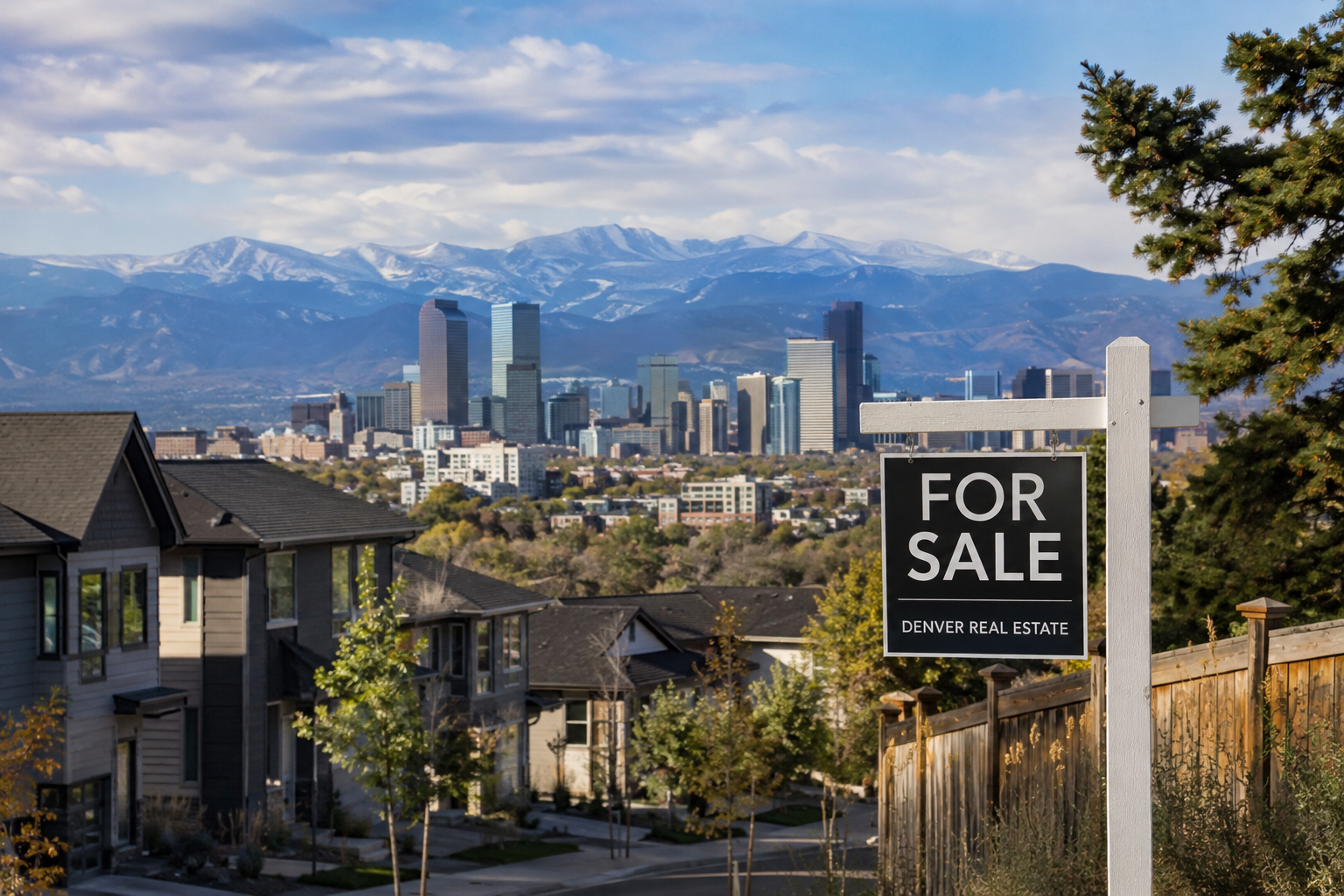
Ask five people what is happening with the Denver housing market right now and you may get five different answers. Buyers see homes sitting longer, price reductions and more room to negotiate. Sellers remember what nearby homes sold for a few years ago and understandably do not want to leave money on the table. Homeowners with low mortgage rates are reluctant to trade them for today’s financing costs. And people waiting for a housing crash keep wondering why prices have not fallen dramatically.
All of those things can be true at once. That is why I think the best way to describe the Denver housing market in 2026 is not as a boom, a bust, a buyer’s market or a seller’s market. It is a standoff, and the force holding it all together is affordability.
More negotiating leverage does not automatically mean better affordability. That tension is the story of the Denver market right now.
Mortgage rates are still calling the shots
It is easy to look at home prices and assume they tell the whole affordability story. For most buyers, they do not. The monthly payment matters just as much. Long-term interest rates remain elevated, and mortgage rates have recently been near their highest levels in roughly a year. That has changed what many buyers can comfortably afford, even if their incomes and credit are strong.
A home that felt manageable when mortgage rates were much lower can feel entirely different at today’s borrowing costs. That does not automatically mean the home lost its value. It means the pool of buyers who can afford it changed. That distinction explains a lot about today’s market.
Buyers have more leverage, but buying is not necessarily easier
Buyers today generally have more breathing room than they did during the frenzy of 2020 and 2021. Depending on the neighborhood, property and price point, buyers may now have time to compare homes, review disclosures, complete inspections and make a thoughtful decision instead of racing to submit an offer the same day.
They may also have opportunities to negotiate on price, seller concessions, inspection items or other terms. That is real leverage. But more leverage does not automatically mean better affordability.
Nationally, existing-home sales slowed again in July while elevated mortgage rates and record-level prices continued to create pressure for buyers. The National Association of Realtors reported that existing-home sales fell 1.7% from June, while the median U.S. sales price for July reached $434,100, up 2% from a year earlier. Those are national numbers, not Denver-specific figures, but the broader pressure is relevant here too.
Why prices have not simply collapsed
If buyers have more leverage, why have home prices not fallen off a cliff? One reason is supply. The country has spent years building fewer homes than the market ultimately needs, and construction is not suddenly solving that problem.
July housing starts fell sharply, including another decline in single-family construction. Higher financing and construction costs are making it harder for builders to deliver homes at prices many consumers can comfortably afford. That matters in Denver because existing homes are not competing against an unlimited supply of inexpensive new construction.
A well-located, properly priced home is still something buyers want. The difference is that buyers are much less willing to overpay for it.
The low-rate homeowner is a huge part of this market
One of the most important forces in today’s housing market happens before a home ever reaches the MLS. Millions of homeowners bought or refinanced when mortgage rates were historically low.
Imagine someone with a 3% mortgage considering a move that would require replacing it with a new loan at a much higher rate. Even if that homeowner has substantial equity, the monthly payment on the next home may be difficult to justify. So instead of selling, many people stay put.
This is often called the mortgage-rate lock-in effect. It affects both sides of the market. There are fewer sellers because homeowners do not want to give up low-cost financing, but those same homeowners are also not becoming buyers of another property. The result is fewer transactions overall.
Homeowners are spending differently too
There is another useful clue in recent consumer behavior. Home Depot reported that homeowners are still completing smaller projects while larger, more expensive improvements remain under pressure. Borrowing against home equity is much more expensive than it was when rates were extremely low, so a major renovation can look very different financially today.
For sellers, the lesson is not that every house needs a remodel before listing. In many cases, that would be the wrong use of money. But in a more selective market, obvious maintenance issues, poor presentation and unrealistic pricing can cost more than they did when buyers were competing for almost anything that became available.
This is not 2008
Whenever housing slows, someone eventually brings up 2008. But slower sales do not automatically mean another housing crisis. The conditions that created the last crash included risky lending, excessive leverage, distressed homeowners, foreclosures and oversupply. Today, many homeowners have substantial equity and fixed-rate mortgages at favorable interest rates. That gives a lot of owners the ability to wait rather than sell under pressure.
Could some homes, neighborhoods or price ranges see declines? Absolutely. Real estate is local. But slower sales alone do not equal a housing crash.
And this definitely is not 2021
Sellers also need to be careful about looking backward. The market a few years ago was created by an unusual combination of very cheap financing, limited inventory and intense buyer demand. That environment does not exist today.
A home that might once have received several offers immediately can now sit alongside many competing listings. Buyers compare condition. They compare monthly payments. They notice price reductions. They have more options, and they are less forgiving of homes that appear overpriced.
That means the highest sale down the street from two or three years ago is not automatically the best indication of what your home is worth today. Market value is about what buyers are willing to pay now, based on the alternatives they have now.
Why some Denver homes still sell fast
Even in a slower market, some homes still go under contract quickly. That is not a contradiction. There really is no single Denver housing market. A renovated starter home in a desirable neighborhood can behave very differently from a luxury property, condo, suburban move-up home or house needing significant repairs.
Price matters.
Condition matters.
Location matters.
Property type and price range matter.
The competition available to buyers at that exact moment matters.
The homes that tend to attract the strongest interest offer a compelling combination of price, condition and location. Homes that miss on one or more of those factors can sit.
What buyers should take from this market
If you are financially prepared to buy, today’s market can give you something that was almost impossible to find a few years ago: time. Time to compare properties, understand the neighborhood, review disclosures, investigate condition and make a decision without panic. In some cases, it also means time to negotiate.
Trying to perfectly predict mortgage rates is much harder. If rates eventually fall, affordability could improve, but lower rates can also bring more buyers back into the market and increase competition.
The better question is not, “Will rates be lower six months from now?” It is, “Does buying this particular home at this particular price and payment make sense for me?”
What sellers should take from it
Sellers are not powerless in this market, but expectations matter more. The strategy that works today is not simply putting a home online and hoping buyers compete. It is positioning the property correctly from the beginning.
That means understanding the competition buyers will see, knowing how your condition compares, and pricing based on current evidence rather than the best sale from several years ago. A seller who gets those things right can still have a very successful sale. A seller who starts significantly above the market can unintentionally make competing homes look like better values.
So, is Denver a buyer’s market or a seller’s market?
The answer is not as simple as a headline. Some segments clearly favor buyers. Others are more balanced. Exceptional homes can still create competition. Overpriced homes can sit. Higher mortgage rates continue to limit what buyers can afford, even when buyers have more negotiating leverage.
That is why broad headlines about “the housing market” are not enough. The more useful question is what is happening with homes similar to yours, in your price range, in your part of the Denver metro area.
The biggest change in 2026 may not be that buyers or sellers have completely taken control. It is that the margin for getting the decision wrong has become smaller. For buyers, that means understanding the payment as carefully as the purchase price. For sellers, it means understanding today’s competition instead of yesterday’s headlines.
Not 2008. Not 2021. A much more selective, affordability-driven Denver housing market where good decisions matter again.
Related Denver real estate reads
What Denver Buyers and Sellers Should Expect in the Second Half of 2026
Should You Wait for Lower Mortgage Rates Before Buying in Denver?
You Have a 3% Mortgage. When Can Moving Still Make Sense?
About Eric Hyatt
Eric Hyatt is a Denver Metro Realtor® with HomeSmart who helps buyers and sellers make real estate decisions using current market data, property-specific analysis and straightforward advice.
Market conditions vary by location, price range and property type. National housing statistics referenced above provide broader context and should not be interpreted as Denver-specific market measurements.
Put the market in context for your move
For the next layer, review current Denver Metro market, buyer representation, seller strategy and There Isn't One Housing Market in 2026: Price Point Explains Why.