At a glance
South Metro & Douglas · City vs Postal
What makes Littleton different
Littleton is both a historic incorporated city and a much larger mailing/search geography. Real-estate analysis should begin by confirming the actual jurisdiction before comparing schools, taxes, utilities, zoning or neighborhood character.
Housing and neighborhood character
Littleton-area housing includes historic and established homes, attached communities, newer redevelopment, station-area locations, and properties governed by several surrounding jurisdictions.
Neighborhood and housing environments
Littleton is one of the places where neighborhood-level analysis matters before price analysis. The incorporated city contains a historic core, postwar neighborhoods, distinctive mid-century architecture, later suburban communities, attached housing, light-rail-oriented redevelopment and newer mixed-use projects. Outside the city boundary, many homes still carry a Littleton mailing address, so the first real-estate question remains jurisdiction.
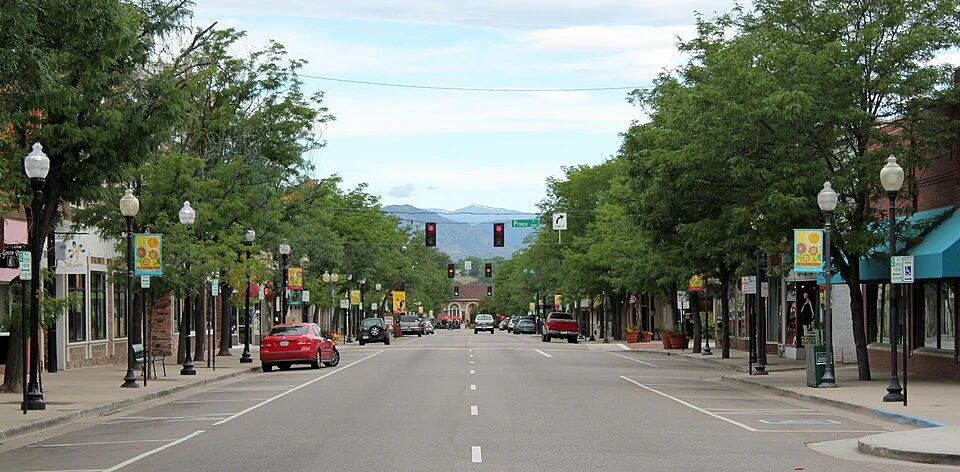
Downtown Littleton, Sterne Park and the historic core
Downtown and the neighborhoods surrounding Sterne Park represent Littleton's oldest and most individualized housing environment. The Downtown Littleton Historic District covers the Main Street and Alamo Avenue commercial core, while nearby residential blocks include older cottages, bungalows, brick homes, additions and infill. Historic designation is property-specific, so exterior-review requirements, prior alterations, sewer condition, foundations, electrical systems and renovation history should be checked at the exact address rather than assumed from the neighborhood name.
Ketring Park, Aberdeen Village and Arapaho Hills
Central Littleton contains some of the city's strongest mid-century identity. Ketring Park and Aberdeen Village include established detached housing on mature streets, while Arapaho Hills is a nationally recognized postwar Modern residential district. In these areas, architecture, original materials, lot orientation and the quality of later alterations can influence value beyond simple square footage. Arapaho Hills also deserves a different comparison set from a conventional ranch subdivision because its design history is part of the property story.
Heritage, Southbridge and Southpark
South and southwest Littleton contain larger areas of later suburban development, including Heritage, Southbridge and Southpark. Housing shifts toward 1970s through 1990s detached homes, townhomes and planned communities with more conventional suburban lot patterns. HOA obligations, attached-versus-detached competition, trail or open-space adjacency, basement finish quality, roofs and major mechanical updates become important parts of comparison.
Riverwalk and the South Platte corridor
The South Platte River is not just a recreation amenity; it is one of Littleton's defining physical features. Riverwalk and other river- or greenway-adjacent properties should be evaluated for trail access, floodplain and drainage context, HOA structure where applicable, and the relationship between the home and major transportation corridors. South Platte Park, the Mary Carter Greenway and the river corridor can create location premiums, but flood and access questions remain address-specific.
TrailMark and the southwest edge
TrailMark represents a newer southwest Littleton housing environment near open space and the foothills edge. Compared with the historic core, the analysis shifts toward HOA documents, newer construction quality, lot premiums, open-space adjacency, wildfire and insurance context where applicable, and the limited number of directly comparable communities inside the incorporated city. It should not be blended casually with older central Littleton sales.
Littleton Village and the Broadway corridor
Littleton Village is a contemporary mixed-housing example along the Broadway corridor, with newer detached, attached and multifamily product in a more compact development pattern. The city's long-range planning also identifies Broadway, Littleton Boulevard, Belleview Avenue and Santa Fe Drive as corridors where redevelopment and mixed-use change can occur. For nearby homes, future land use, traffic projects, walkability improvements and new attached inventory can matter to both resale competition and neighborhood character.
Mineral, Santa Fe and station-area Littleton
The Mineral Avenue and Santa Fe Drive area is its own real-estate environment because it combines established housing, major regional roads, the RTD Littleton/Mineral station, river access and long-term transit-oriented-development potential. Current mobility projects are improving bicycle, pedestrian and intersection connections around Mineral. Buyers should distinguish an existing neighborhood home from attached or future mixed-use product near the station rather than applying one citywide median to both.
Littleton address versus Littleton jurisdiction
A Littleton mailing address can extend well beyond the incorporated city. That changes which municipality or county controls zoning and permits, which utility and recreation districts serve the property, which tax obligations apply, and which neighborhood should supply the comparable sales. Use 'Littleton' to begin the search, but never finish the analysis there.
Neighborhood research base: City of Littleton Envision Littleton Comprehensive Plan and Future Land Use framework, Downtown Littleton Historic District, Arapaho Hills historic resources, HOA mapping, South Platte River planning, Broadway Corridor Study and Mineral-area transportation projects. Exact zoning, district boundaries, historic status and utilities should be verified by property.
Start with jurisdiction
Before evaluating schools, taxes, zoning or utilities, confirm whether the property is actually inside the City of Littleton. Mailing address and municipal government are not interchangeable.
Housing character
Within and around Littleton, housing ranges from older historic and mid-century homes to 1970s–2000s suburbia, townhomes, condos and newer redevelopment. The exact subdivision, municipality and development era matter more than the postal label alone.
Transportation and redevelopment
Downtown Littleton and the city's light-rail/station geography create a different housing environment from the larger suburban Littleton-address market. Station-area redevelopment and corridor planning are important current themes.
The practical takeaway
Use Littleton as a consumer search term, then narrow to the actual city, district and neighborhood before making value or ownership comparisons.
Current market snapshot
August 2026 local market update. Single-family and townhouse/condo activity are shown separately so one property type does not blur the other. The current-month figures show the latest snapshot; the YTD line adds broader trend context.
Single-family homes
August 2026: median sales price $695,000; 553 active listings; 286 new listings; 209 sold listings; 29 days on market until sale; and 99.2% of list price received.
What changed through August: Through August, the YTD median sales price was $710,000 (-1.6% year over year), with 1,528 closed sales (+0.7%), 1,642 properties going under contract (+2.3%), and a 38-day YTD median time to sale (-11.6%). August active inventory was 11.5% below last year.
Townhouse/condo
August 2026: median sales price $405,000; 327 active listings; 103 new listings; 69 sold listings; 61 days on market until sale; and 98.4% of list price received.
What changed through August: Through August, the YTD median sales price was $408,800 (-2.7% year over year), with 494 closed sales (+1.9%), 527 properties going under contract (+1.3%), and a 51-day YTD median time to sale (+8.5%). August active inventory was 12.8% above last year.
Source: DMAR City and County Market Trends Reports, August 2026, using the Colorado Association of REALTORS® Local Market Update. Data from REcolorado® and IRES®; current as of September 3, 2026. Monthly and YTD market statistics describe transaction mix and activity, not the value change of every home or a valuation of a specific property.
Denver Metro benchmark: August 2026
DMAR August 2026 Denver Metro benchmark: 13,080 active listings, 4,893 new listings, 3,332 pending sales and 3,068 closings. The median close price was $594,495, median time in the MLS was 27 days, months of inventory was 4.26 and the close-price-to-list-price ratio was 98.54%.
Detached homes had 8,645 active listings, a $649,500 median close price, 24 median days in the MLS and 3. Attached homes had 4,435 active listings, a $370,000 median close price, 45 median days and 6.77 months of inventory.
Source: Denver Metro Association of REALTORS® Market Trends Report / REcolorado, August 2026. Data through August 31, 2026. Coverage: 11-county Denver Metro: Adams, Arapahoe, Boulder, Broomfield, Clear Creek, Denver, Douglas, Elbert, Gilpin, Jefferson and Park. These are regional benchmark figures, not city-specific statistics.
Monthly medians and year-over-year changes are transaction-mix measures, not a claim that every home in the community changed in value by the same percentage. Property type, neighborhood, condition, price band and rolling-period trends should be reviewed before applying a market statistic to a specific address.
What to verify at the exact address
Confirm city and district boundaries, zoning and overlays, utilities, permits, housing systems, HOA obligations, drainage and floodplain, transit, and current property alternatives.
Explore related area guides
Compare Highlands Ranch, Englewood, and Centennial for additional local context.
Research sources and data notes
City limits · Address Wizard · Zoning portal · RTD schedules
Test the exact property
Community research narrows the map. Before making a decision, verify jurisdiction, taxes, utilities, HOA or metro-district obligations, insurance, condition, access, schools where relevant, and property-specific risks for the exact address. Contact Eric for a property-specific review.
Official property research
Official Littleton property research
Littleton is one of the places where the mailing city can be especially misleading. Verify whether the property is actually inside the City of Littleton before applying city zoning, permit, district or development assumptions.
Continue the research
Connect the area to the rest of the decision.
Community context is only one layer. Use the planning libraries below for property condition, financing, and current Denver Metro market context.
Compare similar communities
Useful communities to compare.
These comparison guides are selected for geographic, housing-market, or ownership-pattern relevance, so you can compare jurisdictions, housing eras, property types, and market context without starting over.
The community guide gets you oriented. The next step is to look at the exact address, monthly ownership costs, condition, and anything unusual about the property.
Ask Eric about a specific property →