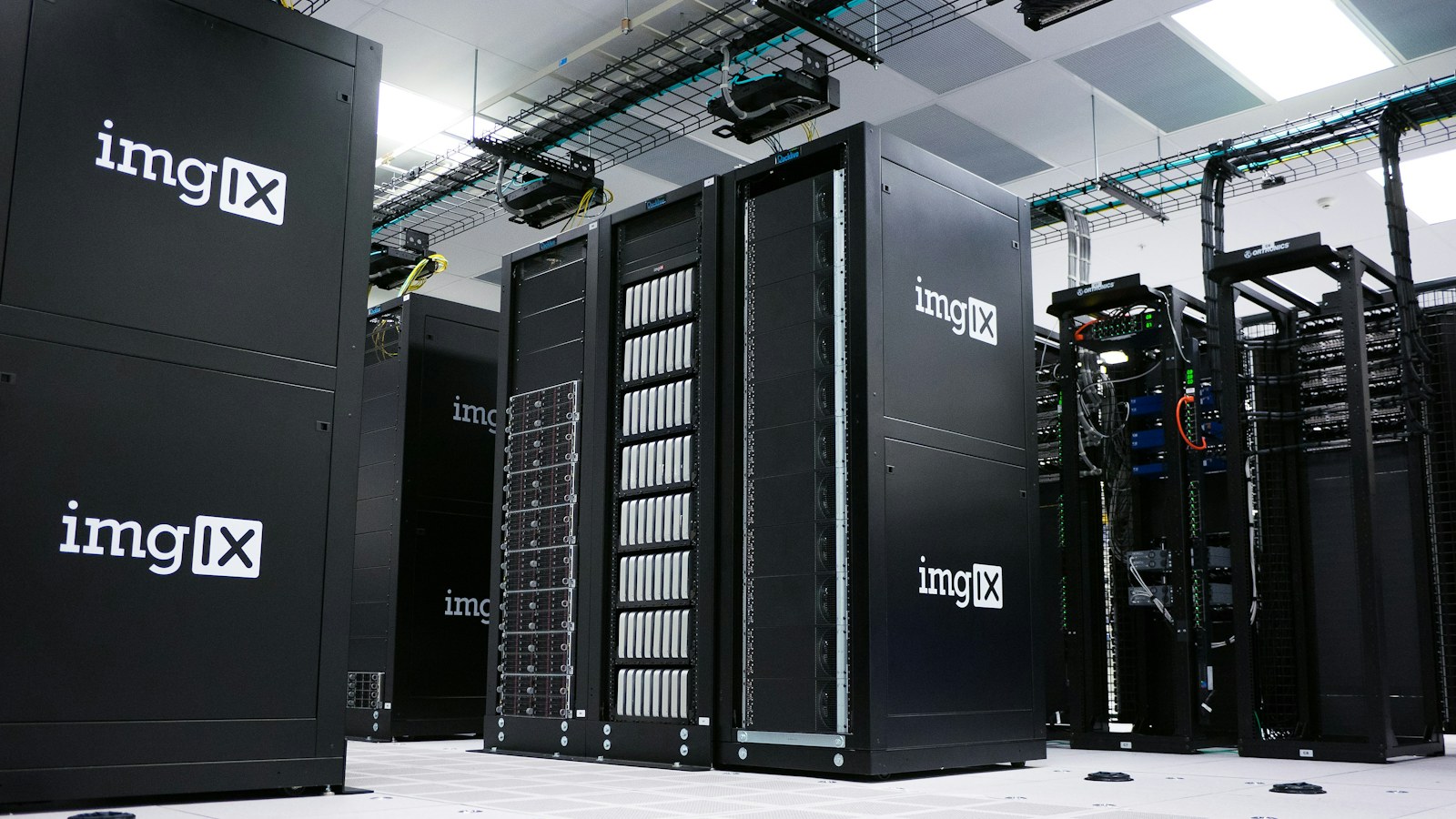
Colorado's data-center debate is no longer simply about whether communities want more technology infrastructure. It is about who pays for new electricity capacity, how facilities fit next to neighborhoods, and whether promised economic benefits justify public incentives. A review of state legislation, city ordinances, local proposals and project economics reveals something important: Colorado communities are taking markedly different approaches, and many widely repeated claims are still proposals rather than law.
First, separate three different kinds of government action
A statewide tax exemption, a city sales-tax rebate, and a local zoning moratorium are not interchangeable. The state can consider tax treatment for qualifying equipment; a municipality can negotiate incentives or restrict land uses; and a county can make separate development and tax decisions. Treating all three as one 'Colorado data-center tax break' misses the real story.
The statewide exemption proposed in 2026 did not become law
House Bill 26-1030 would have created a certification program and a 100% state sales-and-use-tax exemption for qualifying data-center infrastructure, generally lasting 20 years with a potential 10-year extension. Among other conditions, applicants would have needed to commit at least $250 million in infrastructure investment within five years, meet workforce requirements, and address energy efficiency and water stewardship. But the House Energy and Environment Committee postponed the bill indefinitely on May 7, 2026, by an 11-2 vote. It is not an enacted statewide data-center exemption.
The legislature's final fiscal note estimated foregone state sales-and-use-tax revenue under that hypothetical bill of $4.4 million in fiscal 2026-27, $29 million in 2027-28, and $59.1 million in 2028-29. Those are modeled impacts of a bill that failed, not money Colorado has actually paid out under HB26-1030. The distinction matters when evaluating future proposals.
Aurora: existing commitments versus future incentives
Aurora is considering a prohibition on future city sales-and-use-tax incentives for data centers. Reporting on the draft policy says it would not cancel existing agreements. Four existing incentive agreements reportedly carry a combined maximum rebate of roughly $83 million, including up to $39 million associated with the controversial Trident project. These are ceilings under agreements, not verified amounts already paid. The council is scheduled to discuss the proposal November 9; as of this article's November 8 research cutoff, it has not been adopted.
The Trident proposal near the Windler and Green Valley Ranch area has prompted objections from nearby residents, including those in senior housing. Aurora has also rejected an indefinite moratorium twice. That means a proposed tax-incentive restriction should not be described as a ban on data centers or a cancellation of Trident.
Denver: a temporary pause, not a permanent ban
Denver adopted a one-year moratorium on applications for new primary-use data centers and expansions, effective May 21, 2026 through May 21, 2027 unless extended. Previously permitted or under-construction facilities may continue, subject to applicable rules. The city has convened a working group to study zoning, public health, utility costs, air quality, climate goals and neighborhood protections. Its scheduled meetings include November 12 and December 3, 2026. A moratorium buys time for policy design; it does not resolve the underlying tradeoffs.
Littleton: six-month pause adopted, with an important timing caveat
Littleton City Council voted 7-0 on November 3 to adopt a six-month pause on new data-center applications while staff studies tailored land-use standards. The ordinance distinguishes dedicated data centers from incidental server rooms serving another use, and includes exceptions for certain existing rights and ordinary maintenance. The effective date follows legal publication; the precise start and end dates were not independently confirmed at this research cutoff. This is especially relevant to southwest-metro buyers who may see alarming headlines without knowing whether a facility is actually proposed near a particular property.
Parker shows the other side of the policy debate
A Flexential facility under construction near Parker illustrates why some jurisdictions welcome these projects. Reporting identifies a roughly 249,000-square-foot facility, approximately 22.5 megawatts of planned power capacity, and an estimated $205 million private investment. Douglas County considered a business-personal-property-tax rebate with a potential value of about $19.3 million over 35 years. Project documents estimated 16 permanent jobs, although company representatives discussed a higher possible range. The economic case is therefore not simply 'jobs versus no jobs': it involves construction activity, capital investment, long-term employment, taxes and the value of public incentives. The reported proposal should not be mistaken for proof of final rebate payments.
Original comparison: why project scale matters more than the label 'data center'
A useful first-pass measure is permanent jobs per $100 million of announced investment. Using the Parker project's $205 million investment estimate and 16-job county-document estimate yields about 7.8 permanent jobs per $100 million invested. This is an illustrative ratio, not a complete cost-benefit study: it excludes construction jobs, contractors, property-tax effects, utility spending, indirect activity and the timing of any tax rebate. It does show why communities should request project-specific numbers instead of relying on broad industry employment claims.
Power capacity is similarly important. A 22.5-megawatt facility operating at full load around the clock would consume about 197,100 megawatt-hours annually (22.5 × 8,760 hours). That is a mathematical upper-load scenario, not a forecast of actual usage; utilization, efficiency, onsite generation and outages all affect consumption. For buyers, the better questions are whether the utility has sufficient capacity, who finances upgrades, and how large-load tariffs protect existing customers.
What about nearby home values? The evidence is not yet definitive
Proximity to a data center can raise legitimate questions about cooling-system noise, generator testing, visual screening, traffic during construction and electric or water infrastructure. But buyer concern is not the same as a demonstrated reduction in sale prices. A rigorous local property-value study would need comparable transactions, distance bands, property characteristics, pre-announcement price trends and a suitable control group. Without that analysis, claims that data centers automatically reduce nearby home values go beyond the evidence.
An important distinction for homeowners: a proposal, a land-use approval, a utility agreement, construction and an operating facility are five different milestones. A listing near an industrial parcel should not be described as adjacent to a 'coming data center' solely because a developer has discussed one.
A practical due-diligence checklist for Colorado buyers and sellers
1. Identify the exact parcel and jurisdiction. Mailing addresses do not reliably establish whether city, county or another authority controls zoning.
2. Check the planning docket for applications, site plans, hearing dates, vested approvals and appeal periods. Read the actual application rather than relying on social-media maps.
3. Ask for proposed building area, cooling approach, water source, backup generator specifications, noise modeling and screening or setback requirements.
4. Review utility interconnection and ratepayer-protection arrangements where publicly available. Do not assume an industrial user will either raise or lower household bills.
5. Distinguish public subsidies authorized, contractually capped, claimed and actually paid. Those amounts can differ dramatically.
6. For a purchase or listing, assess actual sightlines, road access and comparable nearby sales. Disclose known material facts as required, but avoid unsupported claims about future value.
What happens next
Aurora's November 9 discussion could clarify the future of local tax incentives. Denver's working group meets November 12 as its May 2027 moratorium deadline approaches. Littleton must develop more specific land-use standards during its six-month pause. Any new statewide tax proposal in 2027 would require its own legislative process. These are concrete milestones to watch rather than reasons to predict an immediate statewide policy shift.
Bottom line for Denver-area real estate
Colorado's data-center expansion creates real opportunities for investment and real questions about infrastructure and neighborhood compatibility. The most useful question for homeowners is not 'Are data centers good or bad?' It is 'What exactly is proposed, what has been approved, who bears the costs, and what can be demonstrated about this particular location?' That is the standard buyers, sellers and local officials should apply.
Sources and methodology
Research cutoff: November 8, 2026. Primary sources: Colorado General Assembly HB26-1030 status and June 8 fiscal note (https://leg.colorado.gov/bills/HB26-1030); City and County of Denver data-center moratorium and working-group schedule (https://denvergov.org/Government/Agencies-Departments-Offices/Agencies-Departments-Offices-Directory/Community-Planning-and-Development/Denver-Zoning-Code/Text-Amendments/Data-Centers); City of Littleton Ordinance 22-2026 (https://littletongov.legistar.com/LegislationDetail.aspx?GUID=FB988895-9E37-4643-AD7B-AB3EABB7CC8B&ID=8301070). Reporting cross-checks: Sentinel Colorado, November 6, 2026, on Aurora incentives and Trident (https://sentinelcolorado.com/sentinel-biz-news/aurora-mayor-coffman-pursues-data-center-moratorium-amid-calls-for-new-regs-tax-break-ban/); Denver Gazette, August 11, 2026, on Parker project economics (https://www.denvergazette.com/2026/08/11/parker-data-center-could-get-19m-tax-rebate-from-douglas-county/). The jobs-to-investment and maximum-load calculations are original arithmetic from reported inputs, not official economic-impact estimates.
This article is informational and does not constitute an appraisal, legal opinion, tax advice or a prediction of an individual property's value.