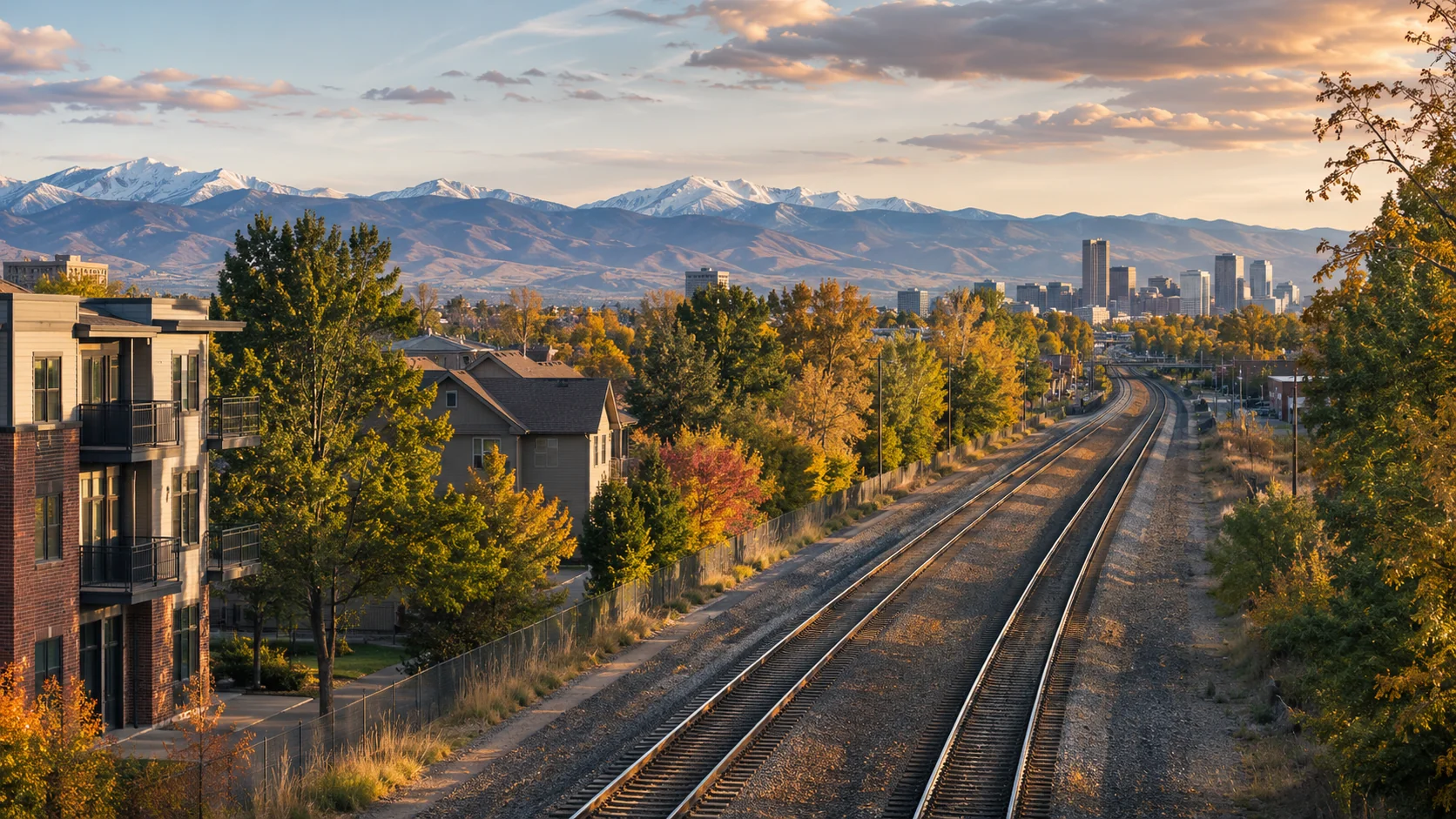
What changed after the November election
The Denver Post reported November 5, 2026 that Issue 7A won sufficient support across the Front Range Passenger Rail District to advance the Colorado Connector passenger-rail proposal. The vote provides a funding mechanism, but it does not mean trains are running or that every required agreement is final. The paper reported that eight of twelve counties showed majority support in the latest unofficial county results, with stronger support in Denver and Boulder County and opposition in several others.
The proposed route and timeline
According to the newspaper, district officials are targeting an initial Denver-to-Fort Collins service by 2029. A southern extension serving Littleton, Highlands Ranch, Colorado Springs and Pueblo is targeted for 2032. These are plans, not guaranteed opening dates. The district still needs final funding approvals from RTD and the Colorado Department of Transportation, railroad access agreements, and design and safety work.
What must happen before service starts
The report identifies Positive Train Control improvements on portions of the freight network, railroad crossing work, passenger platforms and negotiations with BNSF and Union Pacific. District officials expect additional RTD and CDOT decisions in early to mid-2027 and aim to begin northern construction in 2028. Funding and scheduling could change as agreements and engineering advance.
What this means for Denver-area real estate
My analysis: Better intercity connections could eventually change how some households evaluate commuting, access to jobs and proximity to stations. Littleton and the southern suburbs have a particular reason to watch the planned second phase. But there is no sound basis today for claiming that a specific home will appreciate because of a station that has not yet opened. Buyers should evaluate the current commute, existing transit service, neighborhood conditions, taxes and the actual status of planned stops.
Questions buyers and sellers should ask
Where is the proposed station relative to the property? Is that station location approved or preliminary? What is the expected service frequency? Would the service actually help the household's work schedule? What nearby infrastructure or land-use changes are proposed? Answers will be more useful than speculative price premiums.
Sources and related reading
Source: The Denver Post, November 5, 2026, pages A2–A3, reporting by Katie Langford on Issue 7A and the Colorado Connector. Related local market context: https://www.erichyattrealestate.com/market . Explore communities: https://www.erichyattrealestate.com/areas .